
News
-
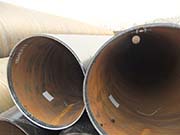
Common defects in spiral steel pipe welding in production operations
Spiral steel pipes are formed by extrusion of strip steel coils at room temperature, but during the extrusion welding process, the gap between the welds on both sides is not smooth or the gap is too large, which affects its appearance and quality. Therefore, the production of the joints of spiral...Read more -
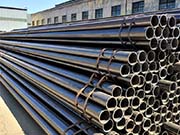
Industrial details of ERW high-frequency straight seam steel pipes commonly used in industrial projects
ERW is a general term for electric resistance welded steel pipes. Electric Resistance Welding (ERW for short) ERW is divided into “ERW steel pipes” and “ERW steel pipes” which are straight seam electric resistance welded. Electric Resistance Welding in English is abbreviat...Read more -
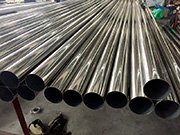
Details of ASMESA312TP304L stainless steel pipes commonly used in industrial projects
ASMESA312TP304L stainless steel pipes and ASMESA312TP304L stainless steel seamless pipes, as extremely important materials in the industrial field, are widely used in many key industries such as petroleum, chemical industry, food processing, medical equipment, and nuclear power plants. Chemical c...Read more -
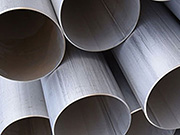
Details of 022Cr25Ni6Mo2N stainless steel welded pipes commonly used in industrial projects
In the modern industrial field, stainless steel welded pipes are favored for their unique corrosion resistance, high strength, and excellent processing performance. Among them, 022Cr25Ni6Mo2N stainless steel welded pipes, as a high-performance stainless steel material, play a pivotal role in many...Read more -
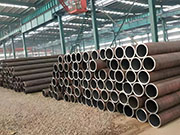
Details of 20G seamless steel pipes for high-pressure boilers commonly used in industrial boiler projects
With the continuous development of industrial production, the requirements for seamless steel pipes for high-pressure boilers are getting higher and higher. As an important industrial material, 20G seamless steel pipes for high-pressure boilers are widely used in many fields. First, the character...Read more -
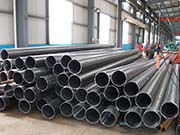
What causes the bending during the production of straight seam steel pipes
Straightening of straight seam steel pipes is an important process in the production of straight seam steel pipes. Especially for oil casing and oil and gas pipes of API standard with high-quality requirements, and special pipes for mechanical equipment, these types of steel pipes not only have s...Read more