
News
-
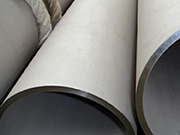
Understand the characteristics and application areas of 48-inch seamless steel pipe
In the steel industry, seamless steel pipe is a common and widely used steel product. 1. What is a 48-inch seamless steel pipe? 48-inch seamless steel pipe is a seamless steel pipe specification with a specific outer diameter and wall thickness. In this specification, “48 inches” mean...Read more -
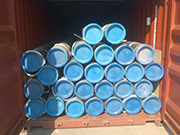
What materials are carbon steel pipes made of
Carbon steel pipes are a common type of pipe in the steel industry and are widely used in construction, machinery manufacturing, petroleum, chemical industry, and other fields. Carbon steel pipes come in a wide variety of materials, and different materials have different characteristics and uses....Read more -
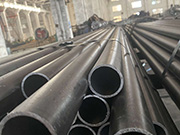
Why do stainless steel precision steel pipes need metallographic inspection
From the perspective of metallography, because stainless steel precision steel pipes contain a high content of chromium, chromium forms a very thin chromium film on the surface. This film isolates the oxygen that invades the steel, thus playing a role in corrosion resistance. For stainless steel ...Read more -
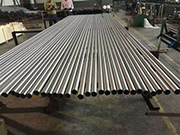
Small-diameter precision stainless steel pipe processing-polishing
Small-diameter precision stainless steel pipes are widely used due to their high corrosion resistance and economic practicality, especially in medical equipment, mechanical parts, experimental equipment, etc. Precision stainless steel pipes should be corrosion-resistant, bright in appearance, and...Read more -
The simple method to identify stainless steel pipes
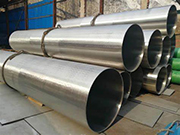
First, magnetic test The magnetic test is the simplest way to distinguish annealed austenitic stainless steel pipes from ferrite stainless steel pipes. Austenitic stainless steel pipes are non-magnetic steels, but they will have a slight magnetism after being cold worked under heavy pressure; pur...Read more -
Corrosion-resistant conventional galvanized steel pipe and its application fields
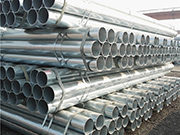
Conventional galvanized steel pipe is a steel pipe that has been hot-dip galvanized and has good corrosion resistance. It is widely used in construction, machinery manufacturing, road traffic, and other fields. Galvanized steel pipes are immersed in molten zinc liquid to form a zinc layer coverin...Read more