
Products News
-
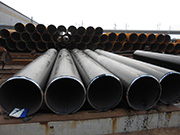
Different types and appearance requirements of straight seam steel pipe
The high-frequency welding process of straight seam steel pipe is completed in the high-frequency welded pipe unit. The high-frequency welded pipe unit is usually composed of rolling forming, high-frequency welding, extrusion, cooling, sizing, flying saw cutting, and other components. The front e...Read more -
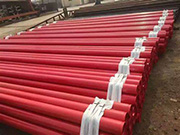
What are the specification requirements for fire pipeline construction
1. General requirements (1) When the pipes of the fire hydrant water supply system adopt hot-dip galvanized steel pipes with inner and outer walls, welding should not be used. When the system pipeline adopts a non-corrosion inner wall, it can be welded, but the welding of the pipeline should meet...Read more -
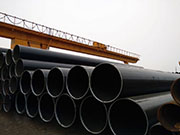
Introduction of de embroidery technology for submerged arc steel pipe
In the process of anti-corrosion construction of oil and gas pipelines, the surface treatment of large-diameter submerged arc steel pipes is a key factor in determining the service life of pipeline anticorrosion, and it is the premise of whether the anti-corrosion layer can be firmly combined wit...Read more -
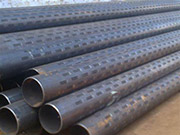
Features of oil slotted pipe
1. The oil slotted pipe is processed by J55 or N80 oil casing body, which has high strength and is not easy to deform 2. The verticality of the cutting edge is good, the cutting edge is smooth, no burr, and the cutting seam is even. 3. Large flow area, 27/8″ slotted pipe with 300 slots/1.5m...Read more -
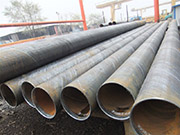
Three connection methods of spiral steel pipe
There are three main types of connection methods for spiral steel pipes. 1. Flange connection: general flange connection speed is fast, construction is convenient, and tools are simple, but it cannot meet the requirements of most projects in terms of safety and sealing. Generally, pipelines with ...Read more -
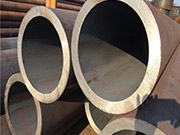
How to operate thick-walled steel pipes
1. The angle steel and channel steel should be stacked in the open air, that is, the mouth should face down, and the I-beam should be placed vertically. The I-channel surface of the steel should not face upward to avoid water accumulation and rust. 2. There should be a corresponding channel betwe...Read more